The right opener for the door
We match the motor, drive, and rail length to the door’s size, weight, construction, and daily use.

Rated 4.9 stars on Google
Noisy, slow, or dead. We will tell you whether the opener is worth repairing before we quote you a new one, and the assessment is complimentary.
Opener dead and the car is inside? Call. We carry typical opener parts in stock for emergency repairs, so a call-out often ends in a fix rather than a quote. Open daily from 8 a.m. to 9 p.m.
Deciding whether to replace it? Tell us the make and what it is doing, and we will book a complimentary assessment.
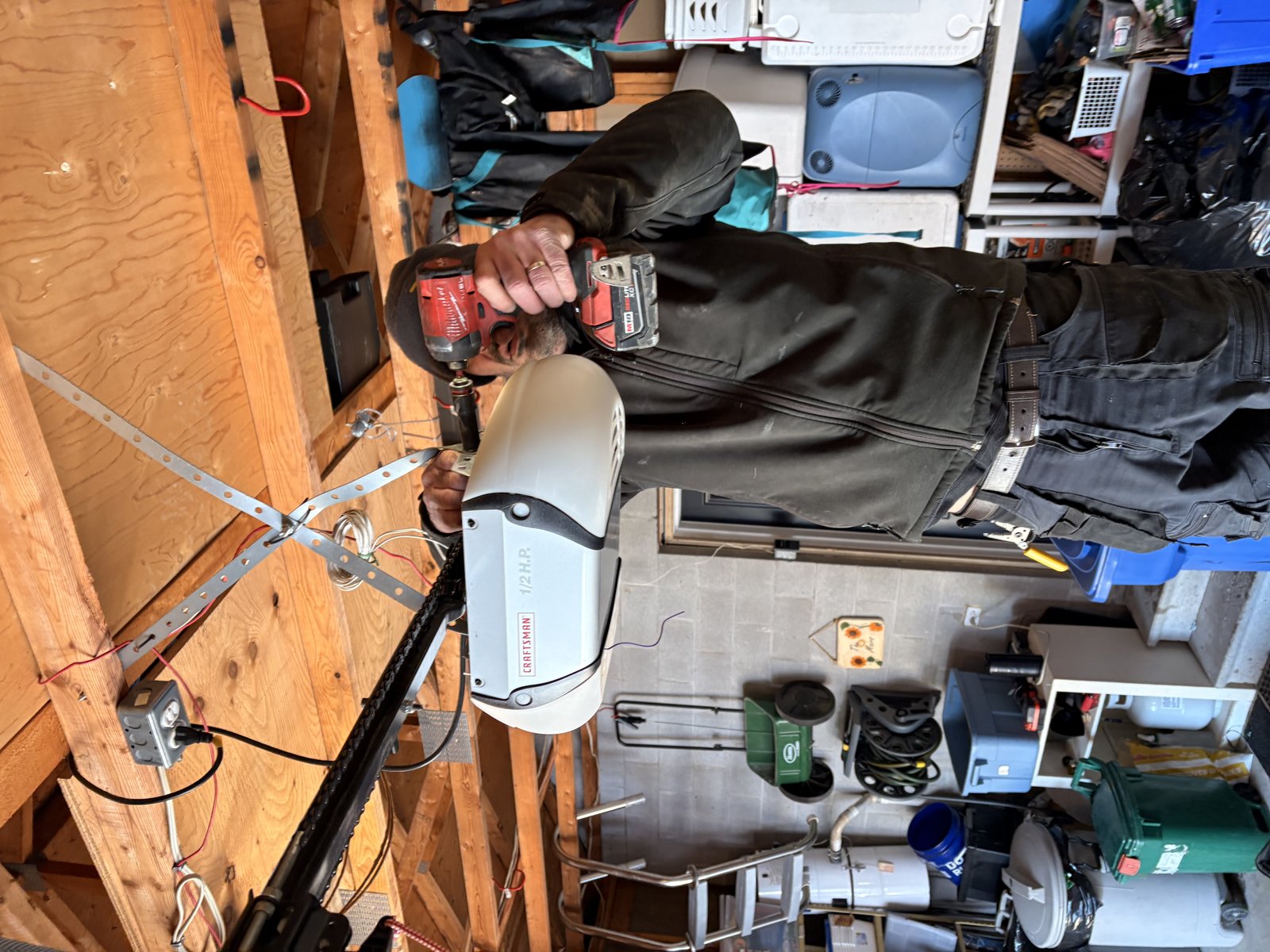
From a noisy motor to a new installation, we check the door and operator together before recommending the next step.
We match the motor, drive, and rail length to the door’s size, weight, construction, and daily use.
Our technicians fit compatible belt-drive, chain-drive, wall-mount, and smart openers according to manufacturer requirements.
We test controls, gears, wiring, safety sensors, and travel settings so a repairable fault is not mistaken for a failed motor.
For a worn or outdated unit, we explain suitable choices and the safety and access features you would gain.
We test door balance, opening force, automatic reversal, photo eyes, emergency release, and programmed controls before leaving.
Reviews from the Mor Garage Doors Google Business Profile. View them on Google
There is no best opener, only the right one for the weight of your door, the space above it, and how close you sleep to it.
Before we suggest a new unit, we check the whole door. A broken spring, binding track, or poor balance can strain a working motor; replacing that motor alone would leave the real problem in place.
The make, the drive type, the age, and what it is actually doing. Some openers are a part; some are a replacement. The assessment is complimentary either way.
Chain is the workhorse. Belt is the quiet one, which matters if there is a bedroom over the garage. Wall-mount frees the ceiling entirely. The door’s weight narrows the list before preference does.
Wi-Fi and phone control, keypads, access control, remote monitoring, battery back-up so the door still opens in an outage. We will tell you which ones you will use.
We take care of the keypad, remotes, access control and sensor connections. The opener system has to operate as one unit or it will fault.
Wi-Fi control, whisper-quiet belt drives, and battery back-up systems, on the brands we install and service.
We carry typical garage door system parts on the vehicle for emergency repairs, so a dead opener does not always mean a new opener.
Know the warning signs
Slow, noisy, inconsistent, or unsafe operation can come from the opener or from the door it is trying to move. These signs tell you when to have the system checked.
A disconnected trolley, stripped gear, broken sprocket, or damaged drive system can separate the motor from the door. A broken spring can also make the door too heavy to lift. We inspect both systems before recommending a repair.
Blocked or misaligned photo eyes and incorrect force settings can trigger a reversal. Tight tracks or damaged rollers can create the same response. We find the source of the resistance before adjusting the opener.
Grinding can point to worn gears, a loose chain, damaged bearings, or motor wear. Rattling may come from mounting hardware or the door itself. An inspection can keep a small fault from damaging more parts.
Wiring faults, receiver interference, a damaged logic board, or a failed wall station can interrupt operation. We test the controls and reprogram or replace compatible parts when needed.
An older unit may be missing monitored sensors, rolling-code security, or battery backup. We can explain whether a repair is practical or a new opener would better meet your safety and access needs.
Opener service
We diagnose the door and operator first, explain repair and replacement options, then test the complete system after the approved work.
Tell us about the noise, movement, failed controls, and any recent door repair. These details help narrow down the fault before the inspection.
We examine the door balance, springs, cables, rollers, hinges, tracks, and mounting points. The door needs to move properly before an opener can run it safely.
The technician checks the motor, rail, trolley, drive, wiring, remotes, wall control, and photo eyes, along with travel and force settings.
We explain the fault, available parts, and the cost of repair alongside a suitable replacement. You approve the work before we start.
We repair compatible components or mount and connect the selected opener, then program the remotes, keypad, and available smart controls.
We test full opening and closing cycles, automatic reversal, sensor response, and the emergency release, then show you how to use the controls.
Compatible systems
We install and service LiftMaster and Chamberlain openers and check how each operator works with the garage door systems we service.






The right motor and controls depend on door weight, headroom, rail length, power needs, and the way you use the garage. Before replacing a logic board, photo eye, remote, or drive component, we confirm its compatibility with the specific opener model. We never bypass safety sensors or increase force settings to push a damaged door closed.
Answers about installation, repairs, replacement, and the safety checks that come with the work.
We mount the motor and rail, connect the trolley and controls, set travel limits, and test the safety sensors. We can also program compatible remotes, keypads, and smart controls.
Replacement may make sense when the motor has major damage, faults keep returning, parts are unavailable, or the unit lacks working safety sensors. We compare that option with the cost and usefulness of a repair.
The trolley may be disconnected, or a gear, sprocket, or drive part may have failed. A broken spring can also leave the door too heavy for the opener. We check the door as well as the motor.
A technician checks the mechanical, electrical, and safety components, identifies the fault, then repairs compatible parts or adjusts the system. Every job ends with an operating and reversal test.
Yes, if the door moves smoothly and has suitable mounting space. We inspect its balance, springs, tracks, and supports before selecting an opener.
Yes. Check the photo eyes and emergency release, and test automatic reversal regularly. Periodic door maintenance can catch worn rollers, loose hardware, or poor balance before those problems strain the opener.
A reversing opener may need sensor work; a heavy door may need spring service. These connected services help resolve the cause, not only the symptom.
Tell us the make and what the opener is doing, and we will come and look at it.